
Basic Legionella risk assessments
The assessment the law requires — and not the certificate it doesn’t
Landlords have a legal duty to assess and control the risk of exposure to Legionella bacteria in their properties. There is no legal requirement to hold a Legionella certificate, and anyone selling you one is selling you something the law does not ask for.
The problem
A widely mis-sold obligation
The duty is real, and the reason for it is simple: people live in these properties and drink and bathe in the water. Under general health and safety law, a landlord must assess the risk of Legionella in the water system and take reasonable steps to control it.
What the duty is not is a requirement for water sampling, laboratory testing or a formal certificate of the kind you hold for gas or electrics. For a typical domestic rented property, a straightforward risk assessment by a competent person, with sensible control measures, is what compliance looks like.
We say this plainly because a number of providers do not, and landlords end up paying for testing regimes designed for commercial buildings with cooling towers.
What’s included
What’s in the assessment
- A survey of the water system — cold storage, hot water cylinder or combination boiler, outlets, showers and any external taps
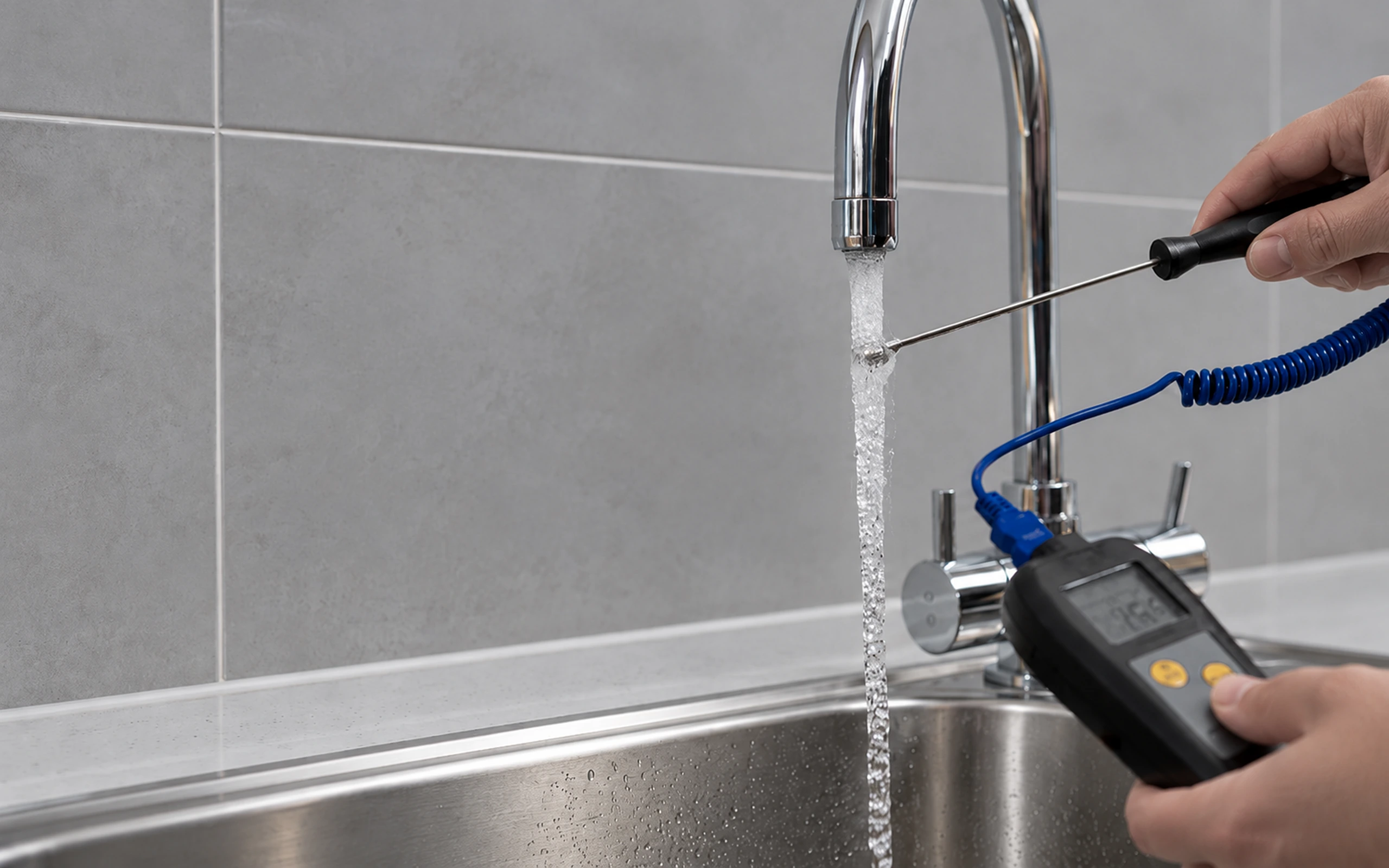
- Water temperature checks at representative outlets
- Identification of stagnation risk: dead legs, redundant pipework, infrequently used outlets, oversized storage
- Assessment against the recognised risk factors for Legionella proliferation
- A written risk assessment recording findings and rating the risk
- Practical control measures the landlord or tenant can actually carry out
- Plain guidance for the tenant on the few steps that matter, such as flushing infrequently used outlets and running through after a period away
- A recommended review date
- 3Water systems
Most domestic properties present a low risk. Where that’s the finding, the assessment says so and explains why, rather than manufacturing a problem.
How it’s delivered
How you get it
Within 24–48 hours through the portal.
The HSE recommends reviewing a Legionella risk assessment at least every two years, and reassessing sooner if the water system is altered or the property has stood empty. We’ll flag the review date on the report.
- Report within 24–48 hoursdelivered through the portal
- Review at least every two yearsas the HSE recommends
- Sooner if things changean altered water system, or a property left empty
- Review date flaggedon every report
Why it matters
Why it’s worth doing properly
Legionnaires’ disease is rare in domestic property and serious when it happens. The assessment exists so that the people living there are safe, and so the landlord can show the duty was taken seriously rather than assumed away.
It’s also increasingly asked for by managing agents during onboarding, and by insurers.
Coverage
Where we cover
Chichester, Portsmouth and across Sussex and Hampshire as standard, with wider coverage across the South East of England and the Isle of Wight through our network.
Book a Legionella risk assessment
Tell us the property and the date, and we’ll confirm availability and price.
Related services
Usually bought as part of a Compliance Pack

Landlord Compliance Packs
Bundled with smoke and CO alarm testing, an HHSRS assessment, PAT testing and an EPC in one booking.